
Stop Lost Calls: Fix Clinic Citations in 30–90 Days, HIPAA Safe
A clinic focused, compliance first checklist to fix citation NAP errors, remove duplicate listings, and collect HIPAA safe reviews across a 30, 60, and 90...

Stop Lost Calls: Fix Clinic Citations in 30–90 Days, HIPAA Safe

A medical clinic citation is any online mention of your practice’s name, address, and phone number, whether that’s a directory listing, a healthcare platform profile, or a mention buried in a footer somewhere. If your Google Business Profile and your top ten citations don’t say the exact same thing, that’s your first fix, before anything else. Skip the fake reviews too. Google and the FTC are both watching, and HIPAA doesn’t take a vacation just because a review left you flattered.
TL;DR:
- Ensuring consistent NAP details across your Google profile, healthcare directories, and website is critical, with critical corrections prioritized to improve local ranking.
- Claiming and maintaining profiles on core platforms like Google, Apple Maps, and Bing should take precedence, while chasing every directory is inefficient.
- Only practitioners who see patients independently need separate profiles; shared clinic profiles are generally safer to avoid suspension risks.
- Collect reviews ethically through verified channels without offering incentives, strictly avoiding any mention of clinical details publicly to comply with FTC and HIPAA rules.
- Conduct regular citation audits monthly for core listings and quarterly for all directories, especially after office moves or contact changes, to sustain citation accuracy.
Table of Contents
- How do you audit your clinic’s citations and prioritize fixes?
- Which citation sites actually matter for a medical clinic?
- How do you create and correct citations without making a mess?
- Should every provider have a Google profile, or just the clinic?
- How do you collect reviews without breaking FTC or HIPAA rules?
- How often should you check citations, and what should you track?
- What should your clinic fix in the next 30, 60, and 90 days?
- Why citation work needs a healthcare-specific approach
- How KLYR Media handles citation cleanup for clinics
- Sources
- FAQ
How do you audit your clinic’s citations and prioritize fixes?
Start with the sources patients actually use to find you: Google Business Profile, Apple Maps, Bing Places, then your top health directories. Pull each listing into a spreadsheet with a screenshot next to it. You want a record, not just a memory of what you saw last Tuesday.
For each listing, check:
- The exact NAP string (name, address, phone) against your website’s footer.
- Address formatting, including suite numbers and abbreviations.
- Phone number type: is it your front desk line or a call center number that confuses patients?
- Website URL, business category, hours, and photos.
Score each listing by severity. A wrong phone number that sends patients to voicemail hell outranks a missing photo every time.
- Critical: wrong phone, wrong address, or a suspended profile.
- Moderate: inconsistent formatting, outdated hours, missing category.
- Minor: no photos, thin description.
Fix anything touching patient contact or Google Business Profile visibility first. Everything else can wait a week. Google explicitly ties profile completeness and accuracy to local ranking, which means a sloppy listing isn’t just annoying, it’s costing you visibility. For a deeper walkthrough of the audit process, see our step-by-step GBP optimization guide.
Which citation sites actually matter for a medical clinic?
Not all listings carry equal weight, and chasing every directory on the internet wastes hours you don’t have. Claim these first, in this order.
- Core platforms: Google Business Profile, Apple Maps, and Bing Places. These feed directly into map results and voice search.
- General directories: Facebook, Yelp, YellowPages, and MapQuest show up repeatedly in BrightLocal’s citation research as the sites most businesses, including medical practices, get listed on. The same research indicates that medical practices commonly have many citations across the web, so consistency at scale matters more than perfection on one site.
- Healthcare-specific platforms: Healthgrades, Zocdoc, Doximity, and Vitals. These carry provider credentials and specialty details that patients and Google both use to judge relevance.
Third-party health directories don’t just sit there. Google pulls data from licensed providers and user contributions to build its own picture of your business, so an outdated Healthgrades profile can quietly undercut an otherwise clean Google listing.
How do you create and correct citations without making a mess?
Pick one canonical NAP and write it down somewhere everyone on staff can see it. Decide now: is it “St.” or “Street,” “Suite 200” or “#200”? Pick one and stop second-guessing it.
- Claim your Google Business Profile, verify it, and lock in the canonical NAP.
- Submit edit requests on Apple Maps and Bing Places using the identical format.
- Update healthcare directories (Healthgrades, Zocdoc, Doximity) to match.
- Search for duplicate listings at your address and request merges or removals.
- Recheck data aggregators, since Google sources profile information from multiple third-party feeds, not just your own edits.
Watch for two recurring pitfalls: a second Google profile created by a well-meaning staffer, and address abbreviations that drift between listings over time.
Pro Tip: Standardize your website’s NAP before you touch a single directory. Bulk citation tools copy whatever they find, errors included.
Manual edits work fine for a handful of listings. Once you’re past twenty, a bulk service saves real time, but only after your source of truth is correct.

Should every provider have a Google profile, or just the clinic?
This trips up multi-provider practices constantly, and it’s an easy way to get a profile suspended if you get it wrong. Google’s own guidance is built around one profile per real-world location, with specific allowances for practitioners who maintain their own distinct patient list.
- A practitioner qualifies for a separate profile only when they see patients independently of the clinic, not simply because they have a name badge.
- Never embed the clinic’s brand name into a practitioner’s profile name. Google flags this fast.
- Sharing one phone number across a clinic profile and five practitioner profiles is a common cause of suspensions.
- The safest setup: one primary clinic profile, individual practitioner profiles only where warranted, each linking back to the clinic’s own booking page.
Assign one staff member to own the naming conventions and unique booking URLs. Our guide on Google My Business for clinics breaks down exactly which licensed roles typically warrant their own listing.
How do you collect reviews without breaking FTC or HIPAA rules?
The FTC’s final rule, published August 22, 2024, bans buying or selling fake reviews, suppressing negative ones, and running undisclosed insider reviews, and violations carry real civil penalties. The FTC’s follow-up Q&A spells out that both the business and the reviewer can be on the hook.
- Ask patients openly for reviews, never in exchange for a discount or a freebie tied to a positive review.
- Use a verified channel, such as a post-visit text or email, and disclose any incentive that isn’t conditioned on sentiment.
- Never confirm a patient relationship in a public reply. That alone can expose protected health information.
- Move any clinical detail to a private message or phone call, with a simple internal template so front-desk staff aren’t improvising.
A very large majority of consumers say they’d avoid a business after finding inconsistent or incorrect contact details online, according to BrightLocal’s trust research. That same trust erosion applies to reviews that feel staged or scripted.
If you spot a fake or insider review, screenshot it, document the timeline, and file a removal request with the platform. Keep the record even after it’s resolved.
How often should you check citations, and what should you track?
Monthly is enough for a quick scan of your top five listings. Quarterly, go deeper across every directory on your list. Any time you move offices, change your phone system, or bring on a new provider, check immediately, not next quarter.
- Use the Google Business Profile dashboard for insights on views, calls, and direction requests tied to your listing.
- Pair it with an automated citation tracker for the directories you can’t realistically check by hand every month.
- Track citation accuracy rate, listing completeness, duplicates resolved, and calls or bookings traced back to specific listings.
If a competitor, a scraper, or a disgruntled ex-employee starts planting coordinated fake listings or reviews, that’s past the point of a DIY fix. Loop in platform support first, and bring in legal counsel if it escalates or if a listing error creates a real patient safety risk. Our local SEO guide for healthcare providers covers the monitoring cadence in more depth.
What should your clinic fix in the next 30, 60, and 90 days?
Break it into phases instead of trying to fix everything the same afternoon.
- Days 1 to 30: Audit your Google Business Profile, fix critical NAP mismatches, claim the major health directories, and correct your website’s own NAP.
- Days 31 to 60: Remove duplicate listings, standardize formatting everywhere, and roll out a compliant review request flow.
- Days 61 to 90: Set a recurring monitoring schedule, start tracking your KPIs, and write down the process so it survives staff turnover.
| Phase | Focus | Primary outcome |
|---|---|---|
| Days 1 to 30 | GBP audit, critical NAP fixes | Accurate core listings |
| Days 31 to 60 | Duplicate removal, review flow | Clean, consistent directory presence |
| Days 61 to 90 | Monitoring, KPI tracking | Sustained accuracy over time |
Why citation work needs a healthcare-specific approach
Clinics that clean up citations properly tend to see fewer misdirected calls and fewer patients showing up at the wrong suite. That’s not a small thing when a missed appointment means a missed diagnosis. Some digital marketing agencies specialize in healthcare practices, incorporating HIPAA considerations into review reply processes from the start.
— Opinly
How KLYR Media handles citation cleanup for clinics
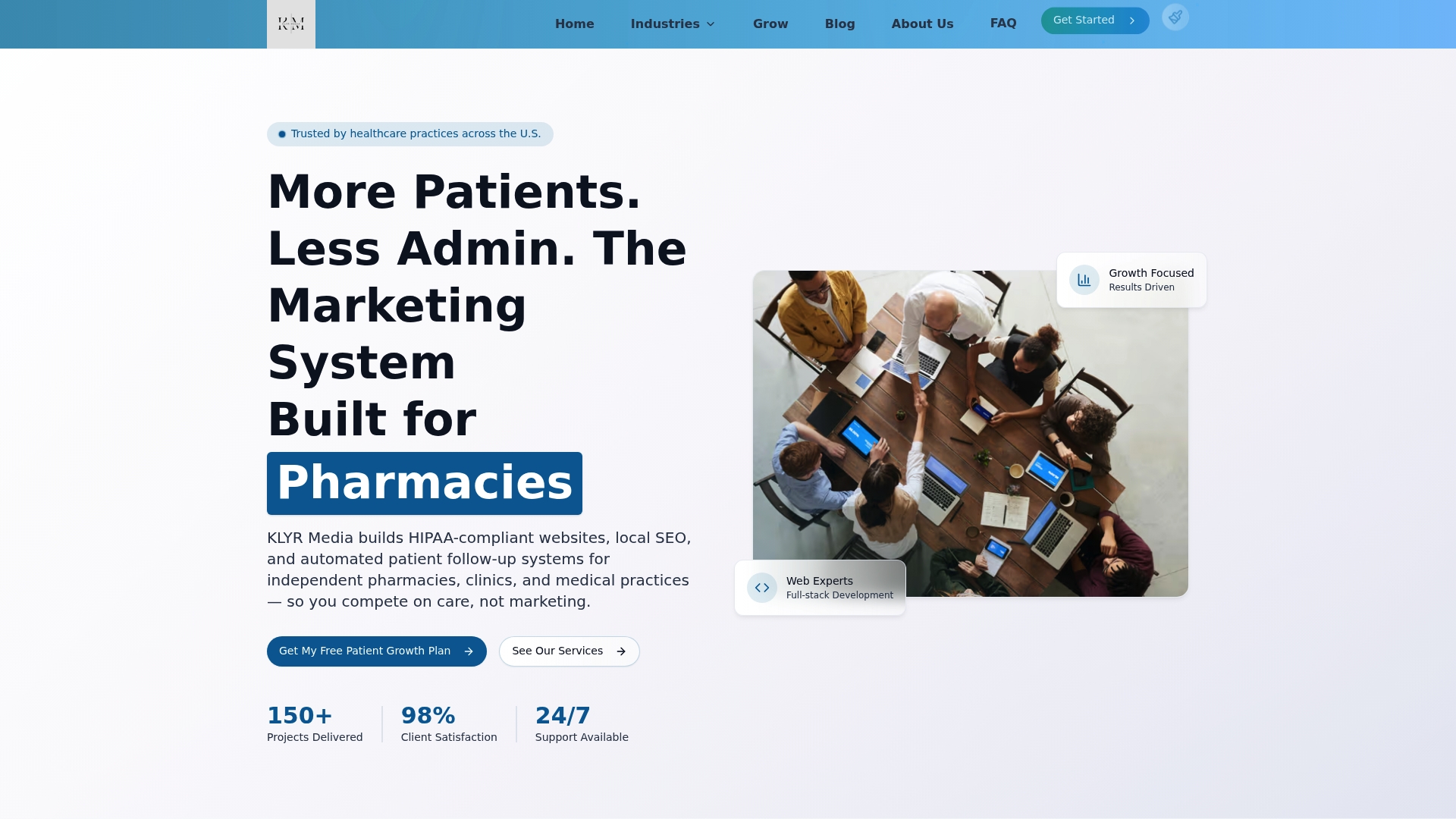
Running a citation audit properly takes hours most practice managers don’t have between patient calls and staffing gaps. KLYR Media’s Healthcare SEO Service builds citation cleanup into a broader local SEO program, so the fixes stick instead of drifting back out of sync six months later.
A typical engagement covers:
- A full inventory of your existing citations, scored by severity, the same way described above.
- Claim and repair work across core platforms and healthcare-specific directories.
- A HIPAA Web Design Service refresh when your website’s own NAP needs to become the canonical source.
- A monitoring handoff so your staff isn’t left guessing what to check next quarter.
Clinics seeking to reduce lost calls due to incorrect contact details should consider starting with a citation audit offered by specialized healthcare digital marketing providers.
Sources
- Federal Register, Volume 89 Issue 163 (Thursday, August 22, 2024)
- The Consumer Reviews and Testimonials Rule: Questions and Answers | Federal Trade Commission
- Tips to improve your local ranking on Google - Google Business Profile Help
- SEO Citations Study: How Many Citations Do Local Businesses Need? | BrightLocal
This article is general information, not a substitute for advice from a qualified doctor. Consult a qualified healthcare professional about your own circumstances before acting on anything here.
FAQ
What counts as a medical clinic citation?
A citation is any online listing of your clinic’s name, address, and phone number, whether on Google Business Profile, a healthcare directory like Healthgrades, or a general site like Yelp. Consistency across these listings, not just their existence, is what supports local search visibility.
How many citations does a medical practice typically need?
There’s no fixed number, but BrightLocal’s research found the average medical practice has around 101 citations across the web. The priority is accuracy on the highest-traffic sites, not chasing every directory that exists.
Can I create separate Google profiles for each doctor in my clinic?
Only when a practitioner sees patients independently and maintains a distinct public patient list, per Google’s profile guidance. Otherwise, one clinic profile is the safer setup, since duplicate or improperly linked profiles risk suspension.
Is offering a discount for a positive review against the rules?
Yes. The FTC’s final rule prohibits incentives conditioned on a review’s sentiment, and its companion Q&A confirms both the business and the reviewer can be held liable.
How should I respond to a negative review without violating HIPAA?
Never confirm that the reviewer was a patient, since that alone can expose protected health information in a public setting. Reply generically, invite them to contact the office directly, and move any clinical discussion to a private channel.

