

Why Competitor Analysis Matters for Medical Clinics

Competitor analysis for medical clinics is the systematic process of evaluating rivals’ services, marketing, pricing, and patient experience to identify opportunities that strengthen your clinic’s market position. This practice, formally called competitive intelligence in healthcare strategy, sits at the core of every clinic that consistently grows its patient base. Without it, you are making decisions based on gut feeling while other clinics read the market clearly. The benefits of market research for medical clinics go beyond knowing what the clinic down the street charges. They reveal why patients choose competitors, which services are underserved in your area, and where your messaging falls flat. Frameworks like CAHPS® and tools from Press Ganey give clinics measurable benchmarks to ground this analysis in real data.
Why competitor analysis is the foundation of clinic growth
Competitor analysis reveals marketing gaps and creates opportunities to attract more patients in healthcare markets. That is not a minor operational benefit. It is the difference between a clinic that reacts to losing patients and one that spots the opening before patients leave.
Most clinic administrators assume they know their competition. They can name the two or three practices nearby and have a rough sense of their pricing. What they rarely know is how those competitors show up online, what patient segments they are actively ignoring, or how their front desk experience compares. That blind spot costs real appointments.

The importance of competitor analysis extends to pricing dynamics and segment saturation. Medical market research clarifies competitive positioning by highlighting trends and pricing dynamics, giving clinics visibility into where the market is crowded and where it is wide open. A clinic that spots an underserved geriatric population in its zip code before competitors do can build an entire service line around that gap.
Healthcare consumer behavior is shaped by digital discovery, online reputation, and local market conditions. Brand awareness and preference vary by geography, which means a clinic’s competitive position in one neighborhood can look completely different two miles away. Knowing this lets you target your marketing budget where it actually moves the needle.
How does competitor analysis reveal marketing and service gaps?
The most useful output of a competitor analysis is a clear map of what your rivals are not doing well. That map tells you exactly where to focus.
Start by evaluating competitors across four core categories:
| Category | What to evaluate |
|---|---|
| Marketing strategy | SEO presence, paid ads, social media activity, review volume |
| Service offerings | Specialties, hours, telehealth availability, wait times |
| Patient experience | Online booking, front desk responsiveness, follow-up systems |
| Pricing and access | Insurance acceptance, self-pay rates, payment plans |
Each category surfaces a different type of gap. A competitor with strong SEO but poor online reviews is vulnerable on reputation. One with great reviews but no telehealth option is missing an entire patient segment that prefers remote access.
Patient experience data alone is insufficient. Market perception research on non-patients is vital to uncover reasons for market share loss. This is the insight most clinics skip. They survey their existing patients and feel good about the results. They never ask the people who chose a competitor why they did not choose them. That missing data is where the real competitive intelligence lives.
Real-time pulse surveys, Google Business Profile metrics, and online reputation tracking through platforms like Press Ganey give you a continuous read on how your clinic compares. Pair that with a review of competitor websites and you start to see patterns fast.
Pro Tip: Set a Google Alert for each competitor’s name and their top service lines. You will get notified when they publish new content, earn press coverage, or change their messaging. It takes five minutes to set up and runs on autopilot.
What role does technology play in modern clinic competitor analysis?
The old model of competitor analysis was a quarterly report that sat in a folder. The new model is continuous, automated, and built for speed.
Generative AI shortens strategic competitive analysis decision-making by 30–50%. Organizations using AI report faster deal cycles compared to manual methods. For a clinic, that speed translates directly into being first to respond when a competitor drops a service, raises prices, or opens a new location.
Continuous intelligence improves agility and prevents reactive decision-making. A clinic that monitors its competitive environment weekly can adjust its messaging, pricing, or service mix before a problem becomes a crisis. A clinic that checks in quarterly is always playing catch-up.
Healthcare marketers should shift from fragmented surveys to integrated strategies that combine annual measurement, continuous feedback, and competitive monitoring. Integrated research models capture shifting local market demand more effectively than any single data source. This means combining your patient satisfaction scores, your online review trends, and your competitor monitoring into one picture.
Here is what a practical continuous monitoring system looks like for a clinic:
- Weekly review of competitor Google Business Profile updates and new patient reviews
- Monthly audit of competitor website changes, new service announcements, and pricing pages
- Quarterly analysis of local search rankings for your top service keywords versus competitors
- Ongoing tracking of your own online reputation metrics against local benchmarks
Pro Tip: Use a shared spreadsheet or a simple project management board to log competitor changes over time. Patterns only become visible when you track consistently. A single data point tells you nothing. Six months of data tells you everything.
Which competitor categories should medical clinics prioritize?
Not all competitors deserve equal attention. Knowing how to analyze competitors means knowing which ones actually threaten your patient volume.
Comprehensive competitor mapping prevents blind spots by identifying all entities competing for patient budget. That includes direct competitors like nearby clinics offering the same services, but also peripheral competitors like urgent care chains, telehealth platforms, and retail health clinics inside pharmacies. Patients do not think in categories the way administrators do. They just want their problem solved quickly and affordably.
The five categories every clinic should evaluate are:
- Services and specialties: What do they offer that you do not? What do you offer that they do not?
- Marketing strategy: How do they rank locally? What is their ad spend? How active is their social presence?
- Business model: Are they cash-pay, insurance-heavy, or hybrid? Do they use membership pricing?
- Operations: What are their hours? Do they offer same-day appointments? How fast is their scheduling?
- Financial signals: Are they expanding locations? Hiring aggressively? These are signs of growth or stress.
Mapping these categories across your top five competitors gives you a clear picture of where the market is concentrated and where it is thin. A clinic that sees three competitors all ignoring Saturday hours in a working-class neighborhood has found a real opening.
Data-driven competitor analysis supports evidence-based decision-making beyond intuition and fragmented insights. Gut feeling has its place, but it cannot tell you that your top competitor’s patient reviews dropped 15% over the last quarter because of front desk issues. Data can.
How can competitor analysis improve patient acquisition and operations?
Intelligence without action is just information. The goal is to turn what you learn about competitors into specific moves that bring in more patients and run your clinic more efficiently.
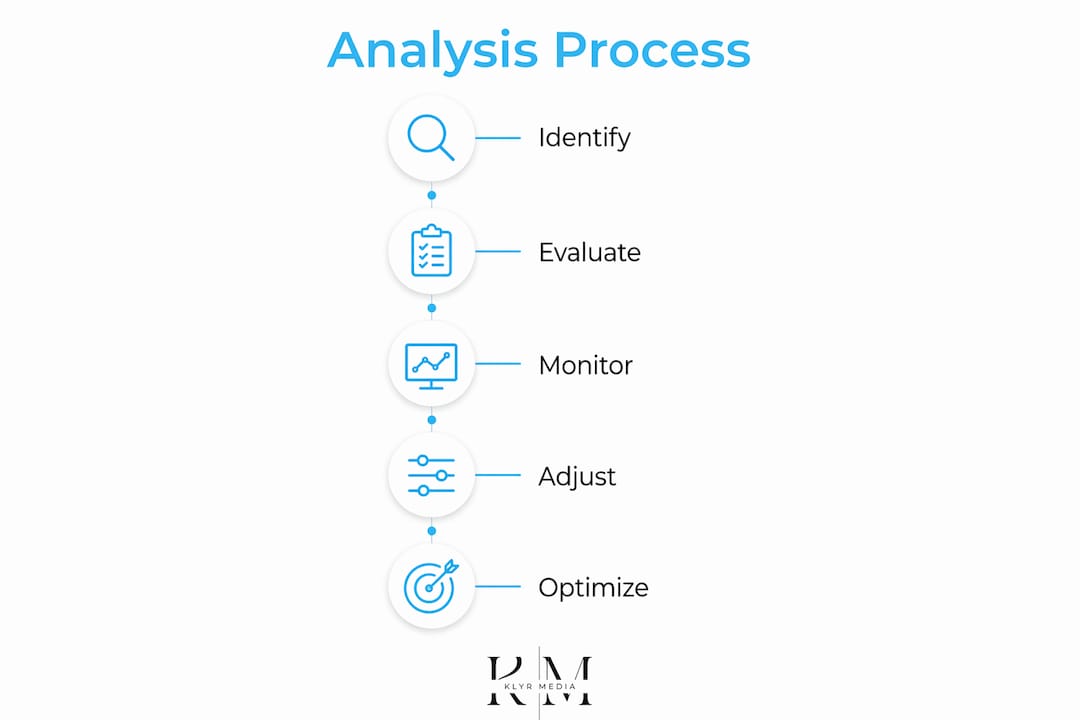
Here is a practical sequence for turning competitor analysis into results:
- Identify the gap. Find a service, access point, or patient segment your competitors are underserving. Examples include extended evening hours, bilingual staff, or a specific specialty like sports medicine in an athletic community.
- Refine your positioning. Adjust your messaging to speak directly to that underserved group. If competitors are generic, be specific. If they are clinical, be warm.
- Adjust your digital presence. Your online presence should reflect your positioning clearly. If you are the clinic with the fastest appointment access, that claim should appear on your homepage, your Google Business Profile, and your ads.
- Fix the experience gaps. If competitor reviews consistently mention long wait times or poor follow-up, and yours do not, make that contrast visible. Highlight it in your marketing.
- Reallocate your budget. Stop spending on channels where competitors dominate and you cannot win. Shift to channels where the gap is real and the cost of entry is lower.
Market perception research must include consumers outside your patient base to reveal blind spots and reasons for losing potential patients. Benchmarking against non-users unearths why consumers choose competitors. Run a simple survey targeting local residents who have not visited your clinic. Ask them where they go for care and why. The answers will surprise you.
Pro Tip: Your online reviews are a free competitor analysis tool. Read your competitors’ one-star and two-star reviews carefully. Patients tell you exactly what they hated. That is your opportunity list.
Competitor analysis is no longer optional. It is fundamental to growth and risk reduction in 2026 healthcare markets. Clinics that treat it as a one-time project will keep losing ground to those that treat it as an ongoing discipline.
Key Takeaways
Competitor analysis for medical clinics is the most direct path to identifying patient acquisition gaps, refining positioning, and making faster, evidence-based operational decisions.
| Point | Details |
|---|---|
| Analysis reveals real gaps | Evaluating competitor services and marketing shows exactly where patient demand is unmet. |
| Non-patient research is critical | Surveying people who chose competitors uncovers why your clinic is being passed over. |
| Continuous monitoring beats quarterly reports | Weekly and monthly tracking catches competitor moves before they cost you patients. |
| AI cuts decision time significantly | AI-enabled analysis reduces strategic decision cycles by 30–50% compared to manual methods. |
| Five categories cover the full picture | Evaluate services, marketing, business model, operations, and financial signals for every key competitor. |
What most clinics get wrong about competitor analysis
Here is the uncomfortable truth I have seen play out repeatedly: most clinic administrators do their competitor analysis once, usually when they are launching or when something goes wrong, and then they file it away. They treat it like a one-time project instead of a living discipline. That is the single biggest mistake.
The clinics that consistently grow their patient base are not smarter. They are more consistent. They check competitor reviews monthly. They notice when a nearby practice starts running Google ads. They see the new telehealth option before it steals their remote patients. They act on that information while other clinics are still debating whether to update their website.
The other mistake I see constantly is relying only on patient feedback from existing patients. Your current patients like you. That is why they are still with you. The patients you lost, or never won, are the ones with the real intelligence. Talking only to your fans is like asking your best friend if your business idea is good. You need the honest answer from the people who said no.
The clinics that get this right combine quantitative data, things like search rankings, review scores, and appointment volume, with qualitative research that goes outside their existing patient base. That combination gives you a full picture. Either one alone leaves you with blind spots that cost real revenue.
— Opinly
Klyrmedia’s approach to clinic competitive positioning
Running a medical clinic in 2026 means competing on digital visibility, patient experience, and speed. Klyrmedia builds the systems that make that competition winnable.
Klyrmedia specializes in healthcare facility marketing for independent clinics and medical practices across the United States. The services include local SEO, HIPAA-compliant website design, patient follow-up automation, and AI-powered tools that give clinics a real-time read on their market position. If your competitor analysis has identified gaps in your digital presence or patient acquisition, Klyrmedia translates those findings into a concrete plan. The goal is not more marketing activity. It is the right activity, targeted at the patients your competitors are missing.
FAQ
What is competitor analysis for medical clinics?
Competitor analysis for medical clinics is the process of systematically evaluating rival practices’ services, marketing, pricing, and patient experience to identify market gaps and growth opportunities. It gives clinic administrators the data they need to make positioning and investment decisions based on evidence, not guesswork.
How often should a clinic conduct competitor analysis?
Continuous monitoring is more effective than periodic reports. Weekly review of competitor reviews and monthly audits of their digital presence give clinics the agility to respond before competitor moves affect patient volume.
Why analyze healthcare competitors beyond direct rivals?
Peripheral competitors like urgent care chains and retail health clinics also compete for your patients’ appointments. Comprehensive mapping prevents blind spots by tracking all entities competing for patient budget, not just the practices in your specialty.
How does competitor analysis improve patient acquisition?
By identifying underserved patient segments and service gaps in the local market, clinics can refine their positioning, adjust their messaging, and allocate marketing budgets to channels where competitors are weakest. This directly increases new patient volume.
What data sources work best for healthcare competitor analysis?
Google Business Profile metrics, online patient reviews, local search rankings, competitor websites, and market perception surveys targeting non-patients are the most practical and accessible sources for ongoing competitive intelligence.

