
Patient Engagement Strategies: An Evidence-Based Playbook
Discover effective patient engagement strategies that deliver quick results in outpatient practices, improving communication and outcomes.

Patient Engagement Strategies: An Evidence-Based Playbook

For most U.S. outpatient practices, four patient engagement strategies deliver the fastest, measurable returns: two-way SMS messaging, structured 24–48 hour post-visit follow-up, self-service scheduling, and condition-specific self-management support. Start there. Everything else builds on that foundation.
Your 30–90 day next steps, in plain terms:
- Assign one owner for each initiative before you build anything. No owner means no follow-through.
- Run a single-condition pilot (diabetes or hypertension work well) on two-way texting and post-visit follow-up for 90 days.
- Track three numbers from day one: no-show rate, portal activation rate, and a Patient Activation Measure (PAM) score at intake.
- Confirm opt-in and escalation rules are documented before your first automated message goes out.
That’s the short version. The rest of this guide explains the evidence behind each strategy, how to implement them step by step, how to measure what matters, and how to avoid the failure modes that sink most pilots.
Key Takeaways
The most effective patient engagement strategies combine evidence-backed clinical approaches, specifically self-management support and shared decision-making, with EHR-triggered automation, equity-ready channel design, and a compact set of operational metrics tracked from day one.
| Point | Details |
|---|---|
| Prioritize four strategies first | Two-way SMS, post-visit follow-up, self-service scheduling, and self-management support deliver the fastest measurable returns. |
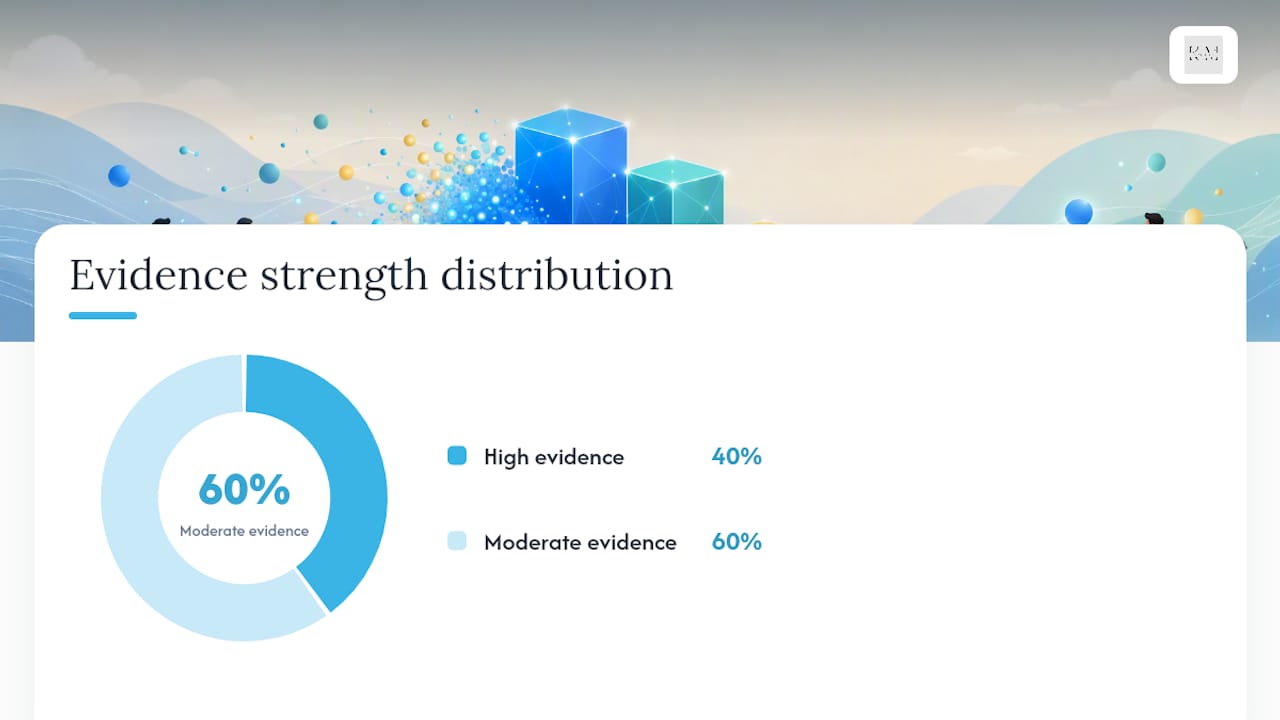
| Evidence strength varies | Self-management support and SDM have the strongest evidence base; technology-enabled outreach is moderate and requires local validation. |
| Assign owners before launch | Every workflow needs a named clinical owner, operational owner, and IT contact or the pilot will stall. |
| Measure a compact core set | Track PAM score, no-show rate, portal activation, and retention; disaggregate by language and demographics from the start. |
| Klyrmedia builds the system | Klyrmedia provides HIPAA-compliant websites and automated follow-up systems designed for independent practices running engagement pilots. |
Table of Contents
- What the research shows about which patient engagement strategies are best-supported
- How to implement each strategy, step by step
- How to build EHR-triggered workflows that reliably deliver engagement
- How to measure engagement impact: metrics, dashboards, and cadence
- Designing engagement for equity: language, literacy, and alternative channels
- A concise implementation checklist and pilot plan for administrators
- How evidence was selected and the limits of the research
- Group education and peer-support programs
- How to tailor engagement for culturally diverse patient populations
- Addressing behavioral health integration within patient engagement programs
- What most engagement playbooks get wrong about digital channels
- Klyrmedia helps you build the infrastructure behind patient engagement
- Sources
What the research shows about which patient engagement strategies are best-supported
The evidence base is not uniform. Some strategies have been tested across hundreds of studies. Others are promising but thin. Knowing the difference keeps you from over-investing in approaches that sound good but lack rigorous support.
A synthesis of a large number of systematic reviews covering direct patient care engagement found the largest body of evidence for self-management support and shared decision-making (SDM). Among those reviews, several reviews showed positive effects and others showed potential benefits for adult self-management interventions, with no reported harms across the reviewed literature. That’s a meaningful signal: high volume, consistent direction, no red flags.
The AHRQ evidence map breaks this down further. Self-management support appeared in many of the reviewed studies; shared decision-making was also a common focus. The most commonly tracked outcomes were medication adherence and chronic disease control, particularly A1c and blood pressure in diabetes and hypertension populations.
Technology-enabled outreach (SMS, patient portals, telehealth) shows strong practical results in pragmatic settings, but the RCT evidence is more mixed. Heterogeneity across study designs, patient populations, and outcome definitions makes it harder to draw clean causal conclusions. That doesn’t mean skip it. It means pilot it, measure it, and don’t assume vendor benchmarks apply to your population.
Health system-level engagement, including Patient and Family Advisory Councils (PFACs), shows benefits for care process design and educational materials, but the evidence is largely observational. Treat PFACs as a quality improvement mechanism, not a clinical outcomes lever.
| Strategy | Evidence Strength | Primary Outcomes Studied | Key Caveat |
|---|---|---|---|
| Self-management support | High | Medication adherence, A1c, BP | Heterogeneity across conditions |
| Shared decision-making | High | Treatment preference alignment, adherence | Requires trained staff and decision aids |
| Two-way SMS / digital outreach | Moderate | No-show rate, follow-up completion | Vendor data varies; RCT evidence mixed |
| Group education / peer support | Moderate | Self-efficacy, chronic disease control | Delivery model affects outcomes |
| Patient portal activation | Moderate | Appointment scheduling, care gap closure | Digital literacy barriers limit reach |
| PFACs / system-level engagement | Limited | Process design, patient satisfaction | Mainly observational; no RCT standard |
| Telehealth / RPM | Moderate | Chronic disease monitoring, access | Equity gaps; reimbursement variability |
How to implement each strategy, step by step
Implementation is where most programs stall. The strategy sounds right in a planning meeting, then nobody owns it, the EHR integration takes six months, and the pilot never launches. Here’s how to avoid that.
1. Two-way SMS messaging
Design the flow first. Map the trigger (appointment booked, care gap identified, post-visit), the message content, the expected patient response, and what happens when they reply. A message that goes out with no one assigned to read replies is worse than no message at all.
Opt-in is non-negotiable. Collect explicit consent at registration or via a digital intake form. Document it in the EHR. Patients who haven’t opted in should receive phone outreach instead.
Staff it. Two-way texting requires someone to monitor the inbox, triage clinical questions, and escalate urgent responses. Budget 30–60 minutes per day for a medical assistant or care coordinator in a mid-size practice. Practices that launch without this staffing plan are the ones that ghost their own patients.
KPIs: Response rate to outbound messages, no-show rate change, time-to-response for inbound replies.
Timeline: 4–6 weeks to configure, test, and train. Measurable signal by week 8.
2. Structured 24–48 hour post-visit follow-up
The 24–48 hour window after a visit is one of the highest-impact periods for follow-up. Patients are still processing their care plan, prescriptions are new, and questions are fresh. A structured outreach in that window, whether by text, phone, or portal message, improves adherence and reduces avoidable readmissions.
What to include: Confirm the care plan was understood, surface any medication questions, remind about next appointment, and provide a direct contact for concerns.
Owner: Typically a care coordinator or medical assistant, with a clinical escalation path to the provider.
Resource level: Low-to-medium. If you’re using EHR-triggered automation, the marginal cost is low once the workflow is built.
Watch-out: Generic “How was your visit?” messages don’t move the needle. The follow-up needs to reference the actual visit, condition, or care plan to feel relevant.
3. Self-service scheduling
Patients who can book, reschedule, or cancel online without calling are more likely to keep appointments. Self-service scheduling also reduces front-desk call volume, which frees staff for higher-value interactions.
Implementation steps: Integrate a scheduling widget into your website and patient portal. Confirm it’s mobile-optimized. Set rules for which appointment types can be self-scheduled versus require a call. Link confirmation texts with a cancellation/reschedule option to reduce no-shows.
KPI: Self-scheduled appointment rate, no-show rate for self-scheduled vs. staff-scheduled appointments.
4. Condition-specific self-management programs
Self-management support is the single most-studied engagement strategy in the literature. For chronic conditions like diabetes, hypertension, and COPD, structured self-management programs, whether individual or group-based, consistently improve clinical markers.
Individual format: Assign a care plan with specific goals, provide written or digital materials in the patient’s preferred language, and schedule regular check-ins. Use motivational interviewing techniques during those check-ins rather than directive advice.
Group format: Shared Medical Appointments (SMAs) and condition-specific group classes allow peer learning and reduce per-patient provider time. They work particularly well for diabetes education and weight management.
KPI: PAM score at baseline and 90 days, A1c or BP at 6 months, program completion rate.
Timeline: 3 months to stand up a basic individual program; 6 months for a group format with trained facilitators.
5. Shared decision-making and decision aids
SDM is not just a checkbox. Done well, it aligns treatment decisions with patient values, improves adherence, and reduces regret. Federal health IT guidance provides practical steps for integrating decision aids into clinical workflows and documenting SDM activity in the EHR.
Implementation: Identify 2–3 high-volume decision points in your practice (e.g., cancer screening, elective procedures, medication initiation). Select validated decision aids from resources like the Ottawa Patient Decision Aids inventory. Train providers on how to introduce and use them in a 15-minute visit.
Watch-out: SDM requires time and trained staff. Practices that try to implement it without protected visit time or provider training see low adoption. Survey data on physician practices confirms that staffing constraints and implementation barriers are the most common reasons SDM stalls.
6. Patient and Family Advisory Councils
PFACs bring patient and family representatives into quality improvement, policy design, and educational material development. They’re most valuable when they have a defined scope, a staff liaison, and a regular meeting cadence.
Resource level: Medium. Requires staff time to recruit, orient, and support members.
Watch-out: PFACs that meet without a clear agenda or decision-making authority lose members fast.
Pro Tip: Start with a small advisory group of 5–8 patients before formalizing a full PFAC. Use the first three meetings to co-design one specific tool, like a discharge checklist or appointment reminder message, so members see their input translated into action quickly.
How to build EHR-triggered workflows that reliably deliver engagement
Manual outreach doesn’t scale. The practices that sustain engagement programs are the ones that embed triggers directly in the EHR so outreach happens automatically at the right clinical moment.
A reliable workflow follows this pattern: trigger → message → response handling → escalation. Each step needs an owner and a rule.
Common trigger points:
- Post-visit (24–48 hours after discharge or office visit)
- Abnormal lab result (e.g., A1c above threshold)
- Care gap identified (overdue mammogram, flu shot, annual wellness visit)
- Missed appointment (same-day or next-day recovery text)
- Prescription fill gap (no fill recorded 7 days after prescribing)
Escalation rules matter as much as the trigger. If a patient replies “I’m having chest pain,” that message needs to route to a clinical staff member immediately, not sit in an unmonitored inbox. Define escalation criteria before go-live and test them.
Who builds this: Your EHR analyst or a health IT vendor partner handles the technical configuration. A clinical lead (physician or NP) approves the trigger logic and message content. A care coordinator or MA owns the response inbox.
Testing before go-live: Run the workflow on a small internal test group (staff or a handful of consenting patients) for two weeks. Confirm messages fire at the right time, responses route correctly, and escalation paths work. Don’t skip this step.
Pro Tip: Keep PHI out of SMS payloads. A text message should say “You have a message from [Practice Name] — log in to your portal to view it” rather than including lab values or diagnoses. This reduces HIPAA exposure significantly and is consistent with AHRQ guidance on secure patient communication. Collect opt-in consent in writing and store it in the EHR.
How to measure engagement impact: metrics, dashboards, and cadence
Tracking too many metrics is as bad as tracking none. You end up with a dashboard nobody reads and no clear signal about what’s working. Pick a compact core set and stick with it.
Core metrics for most practices:
- PAM score (Patient Activation Measure): baseline at intake, repeat at 90 days. The gold standard for measuring how activated a patient is in managing their own health.
- No-show rate: track weekly, disaggregated by appointment type and patient segment.
- Portal activation rate: percentage of patients with an active portal account. Track monthly.
- Retention rate: percentage of patients with a second visit within 12 months of their first.
- CSAT / HCAHPS proxy: post-visit satisfaction score, tracked monthly.
- Clinical markers: A1c and blood pressure for chronic disease populations, reviewed quarterly.
Disaggregate every metric by language preference, age group, and SDOH proxy (zip code, insurance type) from the start. Engagement gaps almost always show up first in these breakdowns, not in aggregate numbers.
| Metric | Definition | Reporting Cadence | Owner |
|---|---|---|---|
| PAM score | Patient self-reported activation level (1–100 scale) | Quarterly | Care coordinator |
| No-show rate | Missed appointments / total scheduled | Weekly | Operations manager |
| Portal activation | Active portal accounts / total patients | Monthly | IT / EHR admin |
| Retention rate | Patients with 2+ visits in 12 months | Quarterly | Practice administrator |
| Post-visit follow-up completion | Follow-ups completed / follow-ups triggered | Weekly | Care coordinator |
| A1c / BP control | % of chronic disease patients at goal | Quarterly | Clinical lead |
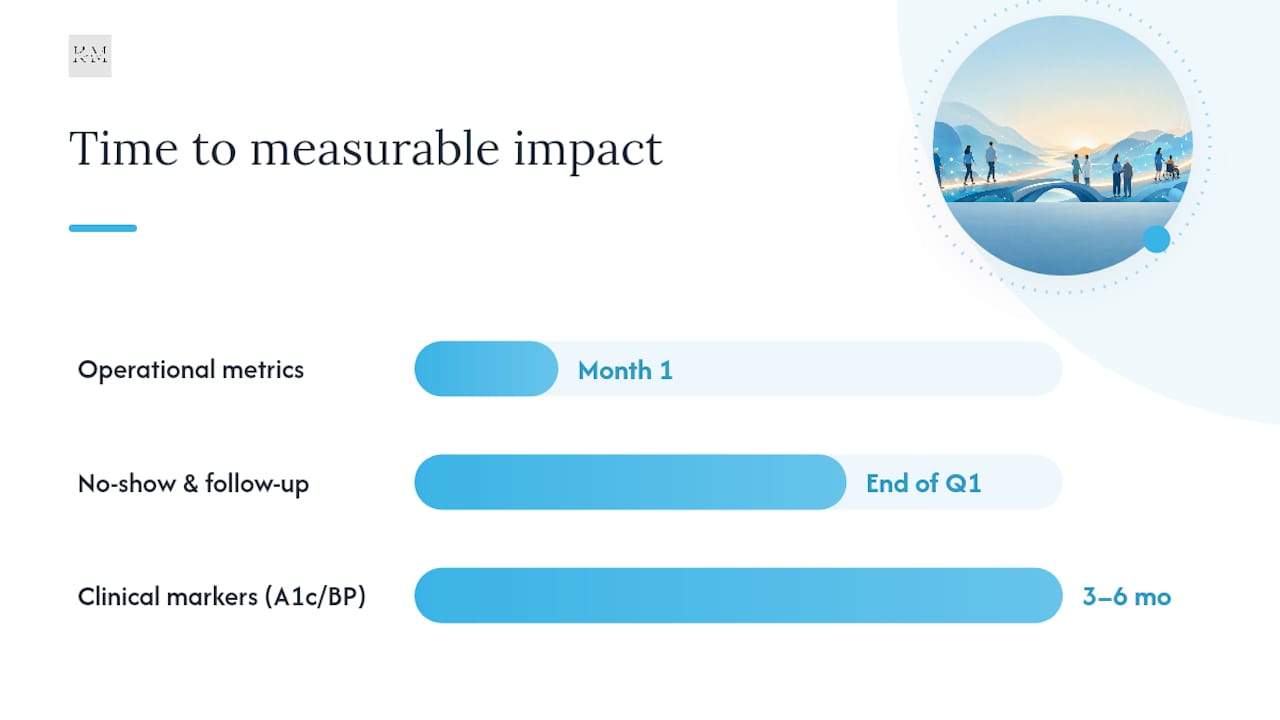
Evaluation timeline: In month 1, you’re watching operational metrics only: are messages sending, are responses being handled, is the workflow functioning? By the end of quarter 1, you should see movement in no-show rate and follow-up completion. Clinical markers like A1c take 3–6 months to shift. Don’t pull the plug on a program at week 6 because A1c hasn’t moved.
Statistical vs. operational improvement: A 2-percentage-point drop in no-show rate in a 500-patient pilot is operationally meaningful even if it doesn’t reach statistical significance. Use operational thresholds to make go/no-go decisions in the first 90 days, and save statistical analysis for the 6-month review.
Designing engagement for equity: language, literacy, and alternative channels
A program that works for your English-speaking, smartphone-owning patients and nobody else isn’t a patient engagement program. It’s a convenience feature for one segment. Equity-ready design isn’t optional, and it’s not complicated if you build it in from the start.
Accessibility checklist:
- Offer all patient-facing materials in the top languages spoken in your patient population. For most U.S. practices, that means Spanish at minimum, with additional languages based on local demographics.
- Write at a 6th-grade reading level for all written materials. Use plain-language tools like the CDC’s Clear Communication Index to test drafts.
- Provide SMS as a primary channel alongside portal messages. SMS reaches patients who don’t have smartphones or reliable internet access.
- Offer phone-based alternatives for every digital touchpoint. Not every patient will use a portal, and that’s fine.
- Train front-desk and care coordination staff on assisted enrollment: walking patients through portal setup during the visit, not after they leave.
- Partner with community health workers (CHWs) for high-complexity or high-risk patients who need human outreach rather than automated messages.
Channel selection logic: Use the portal for detailed clinical information (lab results, care plans, referral letters). Use SMS for reminders, confirmations, and short follow-up prompts. Use phone calls for patients who haven’t responded to two SMS attempts or who have flagged a preference for voice contact. Use CHWs for patients with significant SDOH barriers, limited English proficiency, or low digital literacy.
For more on building patient-facing digital tools that meet accessibility requirements, the Klyrmedia healthcare website accessibility guide covers the practical design and compliance considerations in detail.
Cultural tailoring: Generic messages don’t land the same way across communities. Co-design reminder messages and educational materials with patient representatives from your target populations. Even small changes, like adjusting the tone, the imagery, or the framing of a health goal, can meaningfully improve response rates in specific communities.
A concise implementation checklist and pilot plan for administrators
You don’t need a perfect program. You need a working pilot. Here’s how to build one in 3–6 months without losing momentum.
- Weeks 1–2: Baseline assessment. Pull current no-show rate, portal activation rate, and PAM scores (or set up PAM collection if you don’t have it). Identify your target patient segment for the pilot (single condition, single care team).
- Weeks 3–4: Assign owners. Name a clinical lead, an operational lead, and an IT/EHR contact for the pilot. Document their responsibilities in writing. No shared ownership, no “the team will handle it.”
- Weeks 5–8: Configure and test. Build EHR triggers for post-visit follow-up and care gap outreach. Test on internal staff. Confirm opt-in collection is working. Verify escalation paths.
- Week 9: Soft launch. Go live with a small cohort (50–100 patients). Monitor response rates and inbox volume daily for the first two weeks.
- Weeks 10–12: Iterate. Review operational metrics weekly. Adjust message timing, content, or escalation rules based on what you’re seeing. Don’t wait for the 90-day review to fix obvious problems.
- Month 4–6: Scale and evaluate. Expand to the full target segment. Run the 90-day clinical metric review. Decide whether to expand to additional conditions or care teams.
Questions to ask any engagement technology vendor before signing:
- Does your platform integrate directly with our EHR, and which integration method do you use (HL7, FHIR, API)?
- Who owns the patient data, and what happens to it if we end the contract?
- How do you handle HIPAA compliance for SMS payloads and message storage?
- What reporting exports are available, and can we pull disaggregated data by language or demographics?
- What is your SLA for uptime and support response time?
- Can you provide references from practices of similar size and specialty?
How evidence was selected and the limits of the research
Recommendations in this guide draw primarily from systematic reviews and evidence syntheses published through AHRQ, the NCBI Bookshelf, and high-quality RCTs where available. The AHRQ evidence map and the accompanying synthesis of a large number of systematic reviews form the backbone of the evidence-strength ratings used throughout.
Evidence strength definitions used here:
- High: Multiple systematic reviews with consistent findings, large sample sizes, and outcomes directly relevant to clinical or operational goals.
- Moderate: Promising findings from RCTs or strong pragmatic studies, but with heterogeneity across populations, settings, or outcome definitions.
- Limited: Mainly observational studies, case reports, or small pilots with no RCT-level evaluation.
Known gaps: The evidence base is strongest for individual-level interventions in single-condition populations, particularly diabetes and cancer. Evidence for patients managing multiple chronic conditions simultaneously is thinner. Community-level and health system-level interventions (PFACs, population health programs) rely heavily on observational data. Pragmatic trials in diverse, real-world outpatient settings are still needed, particularly for technology-enabled outreach in low-digital-literacy populations.
Real-world adoption data confirms the gap between evidence and practice. Survey research on physician practices documents varied uptake of SDM, motivational interviewing, and shared medical appointments, with staffing constraints and implementation barriers as the most commonly cited obstacles. The evidence tells you what works. The implementation checklist above tells you how to make it work in your setting.
Group education and peer-support programs
Group-based education is one of the most underused formats in outpatient practice, and one of the more cost-effective ones. When patients with the same condition learn together, they normalize the experience of managing a chronic illness, hold each other accountable, and often ask questions in a group that they wouldn’t raise one-on-one with a provider.
The evidence for group education is moderate. Structured programs like the Diabetes Self-Management Education and Support (DSMES) model, recognized by the American Diabetes Association, show consistent improvements in self-efficacy and A1c control. Peer-support programs, where trained patients with lived experience of a condition support others, add a layer of social accountability that clinical staff can’t replicate.
Practical formats to consider:
- Shared Medical Appointments (SMAs): A provider sees 8–15 patients with the same condition in a group visit. Each patient gets individual clinical time plus the benefit of group education and peer interaction. Particularly effective for diabetes, hypertension, and weight management.
- Condition-specific classes: 4–6 week structured curricula delivered by a health educator or certified diabetes care and education specialist (CDCES). Can be offered in-person or via telehealth.
- Peer navigator programs: Trained patient volunteers or paid peer health workers provide ongoing support between visits. Works well for populations with high SDOH burden.
The key to making group programs work is consistent facilitation and a clear referral pathway from the care team. If providers don’t know the program exists or don’t see referring patients as part of their workflow, the program runs empty.
How to tailor engagement for culturally diverse patient populations
Cultural competence in patient engagement is not about having a Spanish-language brochure. It’s about designing every touchpoint, from the intake form to the follow-up message to the group class curriculum, with the assumption that your patient population is not monolithic.
Start with your data. Pull your patient demographics by language preference, race/ethnicity, and zip code. Identify where engagement metrics (portal activation, no-show rate, follow-up completion) diverge across groups. Those gaps are your design brief.
Concrete steps:
- Hire or contract community health workers who share language and cultural background with your highest-need patient segments. CHWs consistently outperform automated outreach for patients with significant language or literacy barriers.
- Co-design materials with patient representatives. Bring 3–5 patients from a specific community into a 90-minute working session to review a draft message or educational handout. Their feedback will surface assumptions you didn’t know you were making.
- Avoid direct translation as a substitute for cultural adaptation. A message that works in English may carry different connotations, formality levels, or implied relationships when translated word-for-word into Spanish, Mandarin, or Vietnamese.
- Train clinical and front-desk staff on cultural humility, not just cultural competency. The distinction matters: competency implies mastery of a fixed set of facts about a group; humility means approaching each patient as an individual whose background you don’t fully know.
For practices serving diverse urban populations, building a healthcare brand that patients trust across communities requires consistency in tone, visual identity, and communication style across every channel.
Addressing behavioral health integration within patient engagement programs
Behavioral health is not a separate track. Depression, anxiety, and substance use disorders are present in a significant share of patients managing chronic physical conditions, and they directly undermine engagement. A patient who is depressed is less likely to respond to a follow-up text, less likely to fill a prescription, and less likely to show up for a follow-up appointment.
The most practical integration model for outpatient practices is collaborative care, where a behavioral health care manager is embedded in the primary care team. The care manager screens for depression and anxiety (using tools like the PHQ-9 and GAD-7), provides brief interventions, and coordinates with a consulting psychiatrist for medication management. Evidence for collaborative care is strong, particularly for depression in primary care settings.
What this means for your engagement program:
- Add PHQ-9 or PHQ-2 screening to your intake workflow and post-visit follow-up triggers. A patient who scores above threshold should receive a same-day or next-day outreach from a care manager, not an automated wellness message.
- Train care coordinators to recognize behavioral health flags in patient responses to outreach messages. “I don’t see the point” or “I keep forgetting” can signal depression, not just non-compliance.
- Build escalation rules that route behavioral health responses to a licensed clinician, not a medical assistant.
- For practices without an embedded behavioral health provider, establish a warm referral relationship with a local behavioral health organization and document the referral pathway in the EHR.
Ignoring behavioral health in an engagement program is one of the fastest ways to see your clinical outcome metrics plateau. The patients who are hardest to engage are often the ones with the highest behavioral health burden.
What most engagement playbooks get wrong about digital channels
Most guides on how to increase patient engagement treat digital tools as the solution. They’re not. They’re a delivery mechanism. The practices that see real, sustained improvement are the ones that get the human infrastructure right first, then layer technology on top.
Here’s the pattern that plays out constantly: a practice buys a patient engagement platform, launches automated reminders, and sees a short-term bump in portal logins. Three months later, the no-show rate is back where it started, the inbox is full of unanswered patient messages, and the care coordinator is overwhelmed. The technology didn’t fail. The workflow design failed.
The evidence is clear that self-management support and shared decision-making drive the most consistent clinical outcomes. Both require trained staff, protected time, and a care culture that treats patient activation as a clinical priority, not a marketing metric. A branded portal and a slick SMS flow can support those strategies, but they can’t replace them.
The other thing most playbooks underweight is equity. Digital-first engagement programs tend to work best for the patients who are already most engaged: younger, higher-income, higher-literacy, English-speaking. If you’re measuring success by portal activation rates alone, you’re measuring the engagement of your least-vulnerable patients and calling it a win.
The practices that get this right disaggregate their metrics from day one, build alternative channels into the program architecture (not as an afterthought), and treat CHW partnerships as a core budget line, not a grant-funded extra.
Start small, assign owners, measure the right things, and build for your whole patient population. That’s the playbook.
Klyrmedia helps you build the infrastructure behind patient engagement
The strategies in this guide require a digital front door that actually works: a mobile-first, HIPAA-compliant website, automated follow-up workflows, and a clear path from patient inquiry to booked appointment. That’s exactly what Klyrmedia builds for independent pharmacies, medical clinics, and healthcare practices across the United States.
Where most agencies hand you a generic website and walk away, Klyrmedia builds the full system: HIPAA-compliant website design with secure patient portals, plus automated patient follow-up and retention systems that trigger post-visit outreach, recall campaigns, and no-show recovery without adding to your staff’s daily workload. Every build is designed around your EHR, your patient population, and your compliance requirements.
If you’re ready to run a 90-day pilot on two-way messaging or post-visit follow-up automation, start with a discovery call. Klyrmedia will map your current workflow gaps, identify the highest-impact automation triggers for your practice, and build a system you can measure from week one.
Sources
- Strategies for Patient, Family, and Caregiver Engagement — NCBI Bookshelf
- Adoption of Patient Engagement Strategies by Physician Practices in the United States — PMC
- Ahrq
This article is general information, not a substitute for advice from a qualified doctor. Consult a qualified healthcare professional about your own circumstances before acting on anything here.

