
Build HIPAA Aware Medical Service Pages for Clinics That Book Patients
Clinic checklist to build HIPAA aware service pages that rank and convert: clinician bylines, schema chaining, and fast mobile booking.

Build HIPAA Aware Medical Service Pages for Clinics That Book Patients

The single biggest lever for medical service page SEO is consolidation and proof: one dedicated page per service, attributed to a named clinician, wrapped in the right schema, with a booking path a patient can find in three seconds. Skip the generic “Our Services” page. Add patient-language keywords next to the clinical terms, a visible “Medically reviewed by” byline, Service and MedicalCondition schema, and a CTA that doesn’t make someone hunt for your phone number.
TL;DR:
- Each medical service requires a dedicated URL, clear title, and concise meta description focused on patient intent and search keywords.
- Content should include both layman and clinical terminology, with structured sections like “What it is,” “Who it’s for,” and “How to book” to match user behavior.
- Incorporate clinician attribution, real photos, and primary source citations to build trust and demonstrate authority, ensuring schema is properly chained for visibility.
- Ensure website technical health by maintaining fast load speeds, HTTPS, schema validation, and privacy compliance, especially on service pages.
- Amplify local SEO through accurate Google Business Profile links, consistent NPI data, positive reviews, and localized content that references neighborhoods or landmarks.
Table of Contents
- What Should Be on a Medical Service Page for SEO?
- How Do You Write Trustworthy Medical Content That Still Converts?
- Is Your Website Fast, Secure, and Actually HIPAA-Aware?
- Does Local SEO Still Matter If You Already Have a Service Page?
- How Do You Know If Your Service Page SEO Is Actually Working?
- What a Healthcare Marketing Agency Actually Does With This Checklist
- Get Your Medical Service Pages Built Right the First Time
- Sources
- FAQ
What Should Be on a Medical Service Page for SEO?
Most clinic websites bury five procedures under one bloated “Services” tab, then wonder why none of them rank. Google can’t tell what that page is actually about, and neither can a patient scanning it on their phone waiting room. Every distinct service or symptom your practice treats needs its own URL, its own content, and its own conversion path.
Here’s the build sequence, in order:
- Lock the URL and slug first. Keep it short and literal:
/services/echocardiogram, not/services/cardiac-diagnostic-imaging-and-testing-services. Patients type “echocardiogram cost” into Google, not marketing copy. - Write the title tag around patient intent. Something like “Echocardiogram in [City] | Same-Week Appointments” beats “Cardiac Diagnostic Services” every time, because it answers the two questions a searcher actually has: what is this, and can I get in soon.
- Craft the meta description as a mini pitch. One sentence on what the service treats, one on why to book with you, and a soft CTA. Keep it under 155 characters so Google doesn’t truncate it mid-sentence.
- Structure headings around real search behavior. Your H1 states the service plainly. Your H2s should mirror how patients phrase things: “What Is an Echocardiogram?” not “Diagnostic Modality Overview.”
- Cover both vocabularies in your body copy. Patients search “chest flutter test,” not “transthoracic echocardiography,” but your specialists and referring providers search the clinical term. Use both, naturally, in the same paragraph when possible.
Once the skeleton is right, fill it with the sections patients and Google both expect: What it is, Who it’s for, During your visit, How to prep, Insurance and cost, Recovery, FAQs, and How to book. That structure alone tends to satisfy user intent better than a single dense paragraph, because it mirrors how someone actually reads before a medical decision, in short bursts of specific questions.
Length matters, but not the way most SEO blogs frame it. A tight, complete page in the 600 to 1,200 word range, with clinician attribution and clear CTAs, consistently outperforms thin filler pages. Padding a page to 2,000 words with repeated phrases does nothing but slow it down and annoy the person trying to find your booking link.
Speaking of that link: place it in three spots. Above the fold, so it’s the first thing a mobile visitor sees before they scroll. Mid-content, right after you’ve answered “who is this for,” when intent peaks. And as a sticky mobile button that follows the reader down the page. Pair a phone number with online scheduling wherever possible. Some patients want to call; a growing share want to book without ever picking up the phone. Give them both.
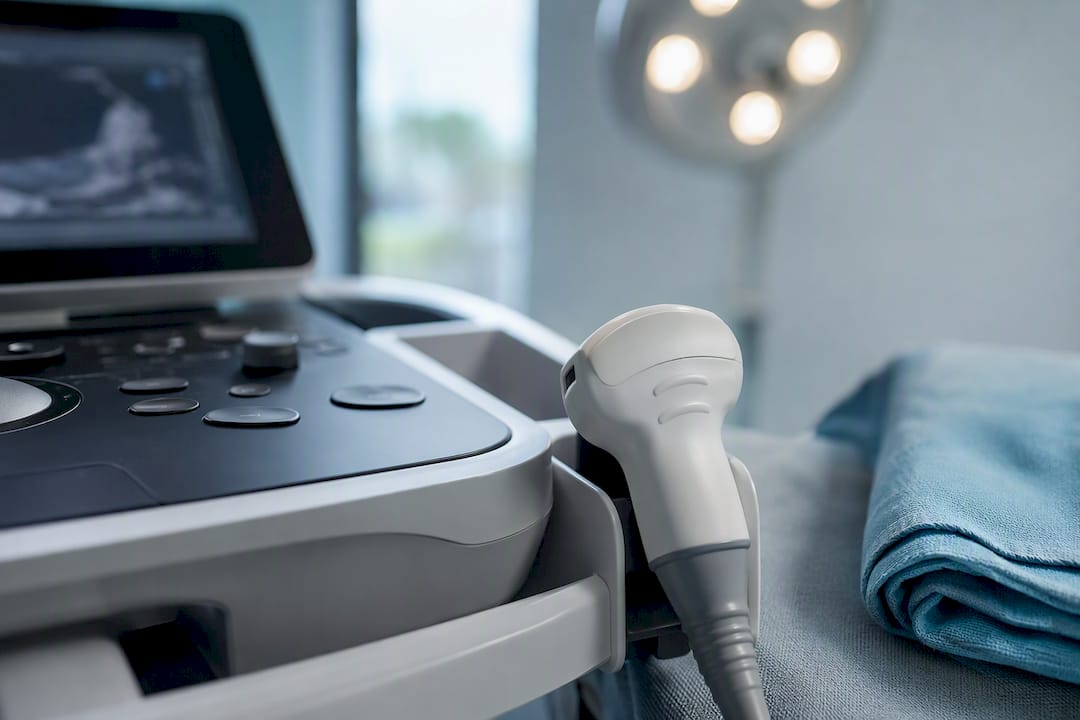
On images, resist the stock-photo instinct. A real photo of the treatment room or the equipment, alongside a short patient-education video explaining what to expect, builds more trust than a smiling model who has clearly never had an echocardiogram. Compress every asset, write descriptive alt text using both the plain-language and clinical term, and never let a hero image slow the page down enough to hurt your ranking before a single sentence gets read.
How Do You Write Trustworthy Medical Content That Still Converts?
Google, and more importantly your patients, want proof that a real clinician stands behind what’s written. That proof has to be visible, not buried in a footer nobody scrolls to.
Start with language. Write the body copy in plain terms first: “swollen, painful joint” before “acute synovitis.” Then thread the clinical term into a subheading or a parenthetical, because patients often search casually while referring physicians and informed patients search with precision. Missing either vocabulary costs you visibility with one audience or the other.
Your medically reviewed byline needs four things to actually function as a trust signal: reviewer name, credentials (MD, DO, NP), specialty, and the date it was last reviewed. Place it directly under the H1 or at the very top of the content block, not tucked into a sidebar where it reads as an afterthought.
Provider bios carry more weight than most practices realize:
- Education and residency background, stated plainly
- Board certifications, named specifically
- Hospital or health-system affiliations
- A
sameAslink to the provider’s NPI registry entry or state medical board listing - A real, current photo, not a decade-old headshot
That last bullet, the sameAs link, is the piece almost every clinic site skips. Without it, a reviewer’s name is just a name. Chained correctly, Person schema connects to Article schema connects to Physician schema, and search engines get a verifiable trail instead of a claim. Author panels with no schema chaining behind them are a weak signal at best.
Citations matter just as much as attribution. When you state a clinical fact, “recovery typically takes six weeks,” link it to a primary source: the CDC, the NIH, a specialty society, or a peer-reviewed article. A peer-reviewed review on health information trust makes the point directly: accuracy alone isn’t enough online, it has to be clearly attributed to be trusted, by readers and by algorithms alike.
Pro Tip: Don’t cite a source once and call it done. Re-link the same primary source across every service page it’s relevant to. It reinforces topical authority and gives Google a consistent trust signal across your whole site, not just one page.
Quality over volume applies here more than anywhere else in SEO. A handful of clinician-reviewed, well-sourced service pages will outperform dozens of thin ones churned out to hit a content calendar.
Is Your Website Fast, Secure, and Actually HIPAA-Aware?
Technical shortcomings quietly tank medical service pages that otherwise have great content. A slow, insecure, or duplicate-riddled site undermines every hour spent on schema and clinical citations.
Speed is non-negotiable on mobile, where most patients are searching mid-symptom. Aim for a Largest Contentful Paint under 2.5 seconds, and watch for layout shifts caused by ads or embedded widgets loading late. Compress hero images, defer third-party scripts that aren’t essential, and test your actual service pages, not just your homepage, since that’s rarely what’s being served in search results.
Indexability is where a lot of clinic sites bleed authority without knowing it. Canonical tags need to point to the single correct version of each service page. Submit a clean sitemap. And check for duplicate or near-duplicate pages, a common problem when a practice builds separate pages for “Echocardiogram” and “Cardiac Ultrasound” that say almost the exact same thing, splitting ranking signals between two competing URLs instead of consolidating them into one.
Forms are where compliance gets real. Never collect protected health information through a standard contact form. Keep intake to name, phone, and preferred appointment time, then route anything sensitive to a HIPAA-compliant portal or a secure vendor built for it. Some practices build these intake flows with that boundary in mind from the start, rather than retrofitting compliance after a form’s already live.
Quick technical checklist:
- HTTPS across every page, no exceptions
- Visible, plainly written privacy policy linked in the footer
- Schema markup validated with Google’s Rich Results Test before publishing
- A simple, always-visible way to contact the practice without filling out a form
Google still handles the overwhelming majority of search traffic worldwide, which is why Search Console errors and Core Web Vitals scores deserve regular attention, not a one-time audit.
Does Local SEO Still Matter If You Already Have a Service Page?
A perfectly built service page still loses to a competitor with a stronger Google Business Profile and more reviews, especially for anything searched with local intent, like “urgent care near me” or “pediatrician Springfield.”
- Decide single-location versus service-area format. A single clinic address gets the location baked into the page naturally. A practice serving several neighborhoods needs a service-area version that names each area explicitly, without keyword-stuffing the same city name into every sentence.
- Tie your Google Business Profile directly to the page. List the specific service in your GBP services field, set the appointment URL to the exact service page (not your homepage), choose accurate categories, and post updates that link back to it.
- Build a deliberate review pipeline. Trigger review requests right after a completed appointment, when the experience is freshest. BrightLocal’s research on local consumer behavior confirms review volume and rating directly shape whether a patient chooses your practice or scrolls past it, and adding review schema helps that trust surface directly in search results.
- Claim and maintain directory listings. Healthgrades, Zocdoc, and specialty-specific directories all feed into how search engines assess your legitimacy. Keep name, address, and phone number identical everywhere. One mismatched suite number can quietly erode local trust signals.
- Add real local texture to the page. Mention the neighborhood, note visible landmarks, and include parking or transit details. It reads as helpful to a patient and as a genuine local signal to Google, doing double duty.
Klyrmedia’s local SEO guidance for healthcare practices covers the citation-consistency side of this in more depth if directory cleanup feels like a project on its own.
How Do You Know If Your Service Page SEO Is Actually Working?
Rankings alone don’t pay the bills. Track what actually moves toward a booked appointment.
- Organic rankings for the specific keyword each page targets, checked weekly, not just at month’s end.
- Organic clicks and impressions from Search Console, which tell you whether the page is being seen even before it earns clicks.
- Phone call clicks and form submissions, tracked as GA4 events, since a page can rank well and still convert poorly if the CTA is buried or confusing.
- Assisted conversions, patients who found the page organically but booked through a phone call days later, a pattern common enough in healthcare that a first-click-only view undercounts real impact.
Run small experiments instead of overhauling everything at once. Test one headline variant, one CTA wording change, or a reordered FAQ section, and give each test at least four to six weeks before judging results. SEO shifts tend to show up in rankings within one to three months and in conversion behavior faster, often within weeks, once the page and CTA are dialed in.
What a Healthcare Marketing Agency Actually Does With This Checklist
Most of this list is straightforward on paper and painfully slow to execute alone, between patient care, staffing, and everything else running a practice. That gap is often addressed by agencies offering HIPAA-aware builds, local-first optimization, clinician attribution, and automated follow-up that turns a booked appointment into a returning patient. The execution sequence stays consistent: audit the existing pages, build a prioritized roadmap, implement the fixes, then measure and adjust.
— Opinly
Get Your Medical Service Pages Built Right the First Time
Specialized healthcare marketing focuses on building compliance in from day one, not bolting it on after a form leaks the wrong data to the wrong vendor.
Some agencies treat different clients alike, but specialized agencies build pages, schema, and intake flows tailored to how patients search and how clinics operate under HIPAA constraints. The Healthcare SEO Service covers the checklist above end to end, from URL structure to schema chaining. If your intake forms are collecting more than they should, the HIPAA Web Design Service rebuilds them around secure, compliant booking paths. And once patients start booking, the Retention Automation Service keeps them coming back with automated follow-up and review requests timed to when patients are most likely to respond.
Ready to see where your current pages stand? Request a service-page audit through Klyrmedia’s healthcare solutions and get a prioritized roadmap instead of a generic checklist.
Sources
- Health Information on the Internet: Quality and Trust (PMC)
- Search engine market share worldwide (Statista)
- BrightLocal: Local Consumer Review Survey
- HubSpot blog marketing industry trends report
This article is general information, not a substitute for advice from a qualified doctor. Consult a qualified healthcare professional about your own circumstances before acting on anything here.
FAQ
What does medical SEO mean?
Medical SEO is the practice of optimizing a healthcare provider’s website, especially individual service pages, so patients searching for specific conditions or treatments can find, trust, and book with that provider. It combines standard technical SEO with healthcare-specific trust signals like clinician attribution and clinical citations.
What are the best SEO strategies for healthcare websites?
Dedicated service pages, visible clinician bylines, chained schema markup, fast mobile load times, and an active local review strategy consistently rank as the highest-impact tactics for healthcare SEO. Content depth matters less than clarity, attribution, and a clear booking path.
How much should I pay for SEO services for a medical practice?
Pricing varies widely based on the number of service pages, your market’s competition, and whether HIPAA-compliant web development is included. Klyrmedia’s current healthcare SEO pricing is available directly on its Healthcare SEO Service page rather than a flat published rate.
Do I need separate pages for every service and symptom I treat?
Yes, each distinct service or condition should get its own dedicated page rather than sharing space on a general “Services” page. Consolidating multiple services into one page dilutes keyword relevance and makes it harder for both patients and search engines to find the specific answer they need.

