
How to Enhance Online Presence for Healthcare Providers
Learn how to enhance online presence for your healthcare practice. Boost visibility and trust to attract more patients in today's digital world.

How to Enhance Online Presence for Healthcare Providers

Enhancing online presence in healthcare means systematically increasing how visible, trustworthy, and engaging your practice is across every digital channel patients use to find care. This is not generic marketing advice. The medical field operates under HIPAA, patient trust dynamics, and a growing shift toward Answer Engine Optimization (AEO), where AI platforms like ChatGPT and Perplexity cite authoritative sources directly. 82–90% of patients research reviews before choosing a provider. That number tells you exactly where patients make their decisions. If your practice is not visible and credible online, you are losing patients before they ever call.
Which digital strategies most effectively increase online engagement for healthcare providers?
Social media engagement is not about how often you post. It is about how fast and how well you respond. Responding within the first hour can increase engagement by 8% to 42%, based on a study of 52 million posts. That means a timely reply to a patient comment outperforms a polished graphic posted at peak hours.
For healthcare providers, the content format matters as much as the timing. Videos explaining common procedures, carousels breaking down medication schedules, and plain text posts answering patient FAQs each perform differently by platform. Short educational videos work well on Instagram and Facebook. Text posts with direct answers perform strongly on LinkedIn for professional audiences.
The most overlooked tactic is asking the right question. Low-friction, specific questions prompt real responses. “What’s one thing you wish you knew before your first appointment?” gets more replies than “Tell us your thoughts.” Patients engage when the ask feels easy and relevant to their experience.
- Reply to every comment within 60 minutes when possible
- Match content format to the platform (video for Instagram, text for LinkedIn)
- Ask one specific, patient-centered question per post
- Prioritize consistency over volume. Two quality posts per week beat seven rushed ones
- Monitor brand mentions and patient conversations, not just your own feed
Pro Tip: Ask your front desk staff what questions patients ask most often in person. Those exact questions make the best social media posts because they reflect real patient concerns, not marketing assumptions.
Effective social media engagement is built by listening and participating in conversations patients care about, not by broadcasting content at them. That shift in mindset changes everything about how you show up online.

How can healthcare websites be optimized for better patient experience and AI search visibility?
Your website is the foundation of your digital presence. If it loads slowly, hides content behind tabs, or reads like a brochure, it fails both patients and search engines. Pages that take longer than 3 seconds to load cause most visitors to leave, which directly lowers your search rankings. Speed is not a technical luxury. It is a patient retention issue.
AI search platforms like Perplexity and ChatGPT pull answers from pages with clear, declarative content structures. FAQ-style headers that mirror patient search queries with direct answers are what AI engines cite confidently. If your services page says “We offer comprehensive care solutions,” an AI will skip it. If it says “We treat Type 2 diabetes with personalized medication management,” an AI will cite it.
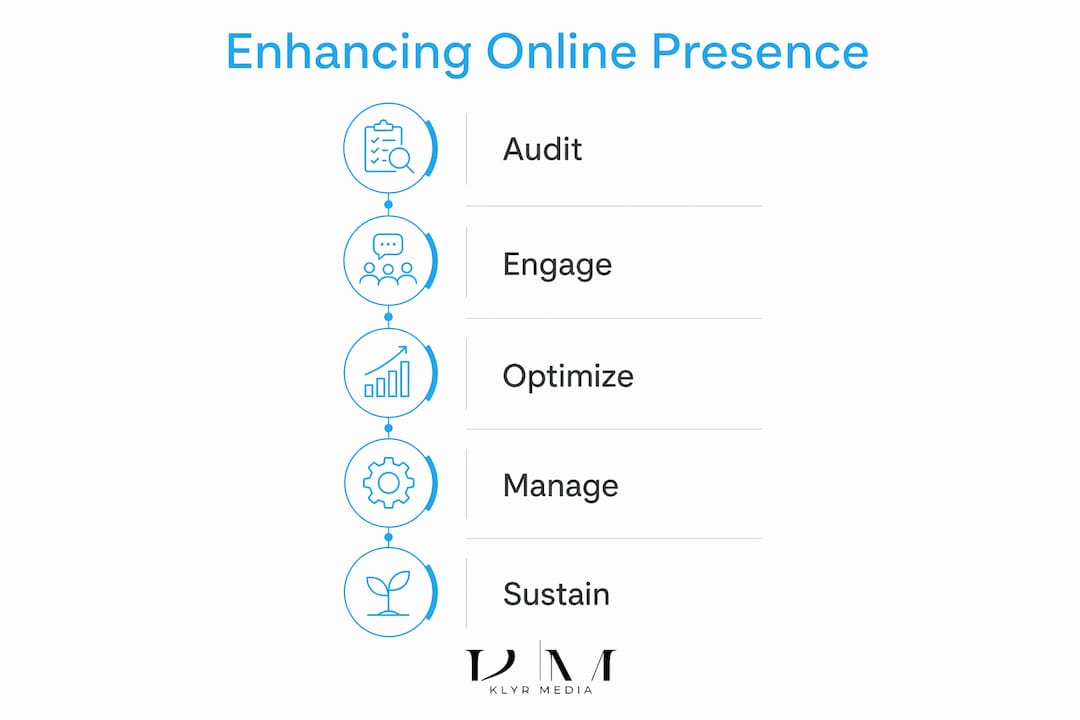
Here is what a well-optimized healthcare website looks like in practice:
| Element | What to do | Why it matters |
|---|---|---|
| Page load speed | Keep under 3 seconds | Reduces bounce rate and protects SEO rankings |
| Mobile responsiveness | Design for small screens first | Most patients search on phones |
| Content structure | Use H2/H3 headers with direct answers | Increases AI citation and patient readability |
| Schema markup | Add medical schema to service pages | Helps search engines categorize your content |
| Hidden content | Avoid tabs and accordions for key info | Crawlers weight visible content more heavily |
Mobile responsiveness and crawlable content are key ranking factors because search engines weight hidden content less than visible text. If your “About Us” section lives inside a collapsed tab, it might as well not exist for ranking purposes.
The goal is to improve patient experience and AI discoverability at the same time. These two goals are not in conflict. A clean, fast, clearly written site serves both.
What role do online reputation and patient reviews play in enhancing online presence?
Your online reputation is your most visible marketing asset. Patients trust reviews the way they used to trust word of mouth from a neighbor. With 82–90% of patients checking reviews before booking, a weak or unmanaged review profile costs you appointments every single week.
The good news is that reputation management does not require a big budget. It requires consistency. Here is what works:
- Respond to every review, positive or negative, within 48 hours
- Thank positive reviewers by name and reference something specific they mentioned
- Address negative reviews calmly and move the conversation offline with a direct contact option
- Ask satisfied patients to leave a review at checkout or via a follow-up text
- Embed authentic patient testimonials on your website’s service pages
Negative reviews handled well actually build trust. Patients know that problems happen. What they watch for is how your practice responds. A thoughtful, professional reply to a one-star review signals that you take patient experience seriously.
Reputation management also feeds your SEO. Fresh, keyword-rich reviews on Google Business Profile signal relevance to search algorithms. A practice with 200 recent reviews outranks one with 20 old ones, even if the older reviews average a higher rating. For a deeper look at why this matters in 2026, the impact of patient reviews on healthcare visibility is worth understanding in full.
Which multi-channel content tactics sustain healthcare online visibility over time?
One-off campaigns do not build lasting visibility. Consistent, value-driven content does. The practices that grow their online audience over time treat content as infrastructure, not decoration. Here is a proven sequence:
-
Build content hubs. Group related articles, videos, and FAQs around core topics like “diabetes management” or “pediatric care.” Content hubs and clear site hierarchy improve AI retrieval and patient navigation, increasing both visibility and engagement. A hub on “blood pressure management” that links to five supporting articles signals topical authority to search engines.
-
Publish educational videos. A short video tour of your clinic or a 90-second explanation of a common procedure builds patient confidence before they ever walk in. Video tours build patient confidence in ways that text alone cannot replicate. Patients who feel familiar with your space are more likely to book.
-
Participate in healthcare communities. Answer questions in relevant online forums, contribute to local health discussions, and engage in LinkedIn groups for medical professionals. This builds authority and generates organic mentions that improve your Share of Voice.
-
Use AI tools to repurpose content. A single blog post can become a social media carousel, a short video script, and an email newsletter. AI writing tools help you remix existing content across platforms without starting from scratch every time.
-
Update content regularly. Search engines favor freshness. A guide published in 2023 that has not been updated signals stagnation. Review your top pages every six months and add new data, patient questions, or regulatory updates.
Pro Tip: Use your healthcare digital marketing checklist to audit your content across channels quarterly. Gaps in coverage are often where competitors quietly take your rankings.
Trust-building through consistent, accessible healthcare content creates a feedback loop. Better content earns more citations. More citations drive more traffic. More traffic generates more reviews and social signals. The cycle compounds over time, which is why starting now matters more than starting perfectly.
Brands that want to earn AI citations specifically should aim for a 15–20 percentage point increase in Share of Voice and Source Visibility over six months. That benchmark reflects what it takes to become a source that AI platforms reference reliably.
For healthcare providers who want to tell their practice story across channels, a solid clinic storytelling strategy makes the difference between content that gets scrolled past and content that earns patient trust.
Key Takeaways
A healthcare provider’s online presence grows fastest when engagement speed, website clarity, reputation management, and multi-channel content work together as a system rather than as separate efforts.
| Point | Details |
|---|---|
| Reply speed drives engagement | Responding to social comments within one hour increases engagement by up to 42%. |
| Website speed protects rankings | Pages loading over 3 seconds cause most visitors to leave, directly hurting SEO. |
| Reviews decide patient choices | 82–90% of patients check reviews before booking, making reputation management non-negotiable. |
| Content hubs build AI visibility | Grouping related content around core topics signals authority to both search engines and AI platforms. |
| Consistency compounds results | Regular content updates and active social listening build trust and search visibility over time. |
What I’ve learned about healthcare online presence that most guides won’t tell you
The biggest mistake I see healthcare providers make is treating their online presence like a one-time project. They build a website, set up a Google Business Profile, and then go quiet for two years. Meanwhile, a newer clinic down the street posts twice a week, replies to every review, and quietly takes their search rankings.
The shift from traditional SEO to Answer Engine Optimization is real and it is accelerating. AI platforms do not rank pages. They cite sources. That means your content needs to answer specific patient questions directly, not bury the answer in three paragraphs of background. I have seen well-funded practices get outranked by smaller clinics simply because the smaller clinic wrote cleaner, more direct content.
Engagement quality also matters more than most people realize. A post with 10 genuine comments from patients asking follow-up questions is worth more than a post with 200 likes and no conversation. Likes are passive. Comments are relationships forming in public. That is what builds the kind of trust that converts a browser into a booked appointment.
The hardest part is not the strategy. It is the discipline to keep going when results feel slow. Online presence builds like compound interest. The practices that win are the ones that treat digital visibility as a long-term asset, not a short-term campaign.
— Opinly
How Klyrmedia supports healthcare providers building a stronger digital presence
Healthcare providers face a challenge most marketing agencies do not understand. You need visibility, but you also need compliance. Generic web design and social media tactics do not account for HIPAA, patient data sensitivity, or the trust standards patients hold medical practices to.
Klyrmedia builds HIPAA-compliant websites designed specifically for medical clinics, independent pharmacies, and healthcare practices across the United States. Every site is built for speed, mobile responsiveness, and AI search visibility. Klyrmedia also offers patient follow-up automation that keeps patients engaged after their appointment, improving retention without adding work to your front desk. If you are ready to grow your practice’s online presence with a team that understands healthcare, Klyrmedia is built for exactly that.
FAQ
How long does it take to improve digital visibility for a healthcare practice?
Meaningful improvements in search rankings and patient engagement typically appear within three to six months of consistent effort. AI citation visibility benchmarks suggest targeting a 15–20 percentage point increase in Source Visibility over six months as a realistic goal.
What is the most important factor in boosting social media presence for medical providers?
Response speed is the single highest-impact factor. Replying to comments within the first hour increases engagement by up to 42%, outperforming posting frequency or content production quality.
How do patient reviews affect a practice’s online reputation and search rankings?
Patient reviews directly influence both trust and SEO. Fresh, detailed reviews on Google Business Profile signal relevance to search algorithms, and 82–90% of patients consult reviews before choosing a provider.
What does HIPAA compliance mean for a healthcare website?
HIPAA compliance means your website handles patient data, contact forms, and any communication tools in ways that protect patient privacy under federal law. Non-compliant websites expose practices to regulatory penalties and erode patient trust.
How can small clinics compete with large hospital systems online?
Small clinics win by publishing specific, locally relevant content that answers real patient questions directly. Content hubs, active review management, and fast-loading mobile sites give independent practices a real edge over larger systems that move slowly and publish generic content.

